Freiensteinau – Nature, Legends, and Recreation
The municipality of Freiensteinau is nestled in the beautiful low mountain landscape at the southern tip of the Vogelsberg district. Surrounded by unspoiled nature, it offers an ideal retreat for visitors seeking peace and relaxation. The Nieder-Mooser Lake, with its campsite, and the Vulkan Leisure Park invite guests to unwind and enjoy a wide range of outdoor activities.
People who experience the hustle and bustle of city life every day especially appreciate the tranquil atmosphere of Freiensteinau’s villages. Here, you can quickly leave behind the stress of heavy traffic, air pollution, crowded subways, and busy streets. Located in the heart of Germany, the villages of Freiensteinau have preserved their high quality of life and rural charm.
Freiensteinau for Fairy Tale Enthusiasts
A rocky outcrop on the Wintersberg, a solitary basalt hill near Freiensteinau, is known as the Wild Stone. Within the rock is a hollow that resembles a cradle and has long been called the Christ Child’s Cradle by young and old alike.
According to local legend, the Blessed Virgin Mary spent a night here during her journey and laid the infant Jesus in this natural cradle. Others believe it was Frau Holle, the legendary figure from German folklore, who rested here instead. Many years ago, music and dancing were traditionally held at this site every year on St. John’s Day, adding to its mystical atmosphere.
Freiensteinau for Holidaymakers and Day Visitors
The Nieder-Mooser Lake, with its campsite and motorhome parking area, is the region’s main tourist destination for nature lovers, swimmers, hikers, sailors, windsurfers, and anglers. The entrance to the premium hiking trail “Three Lakes Tour” (Drei-Seen-Tour) is located next to the campsite. This 13-kilometre circular route can be comfortably completed in around three and a half hours and is also suitable for less experienced hikers.
On the opposite side of the lake, the Vulkan Leisure Park offers a variety of attractions, including a miniature golf course, a disc golf course, a tipi village, inflatable play areas, and much more. It is the perfect place to enjoy outdoor activities in a natural setting.
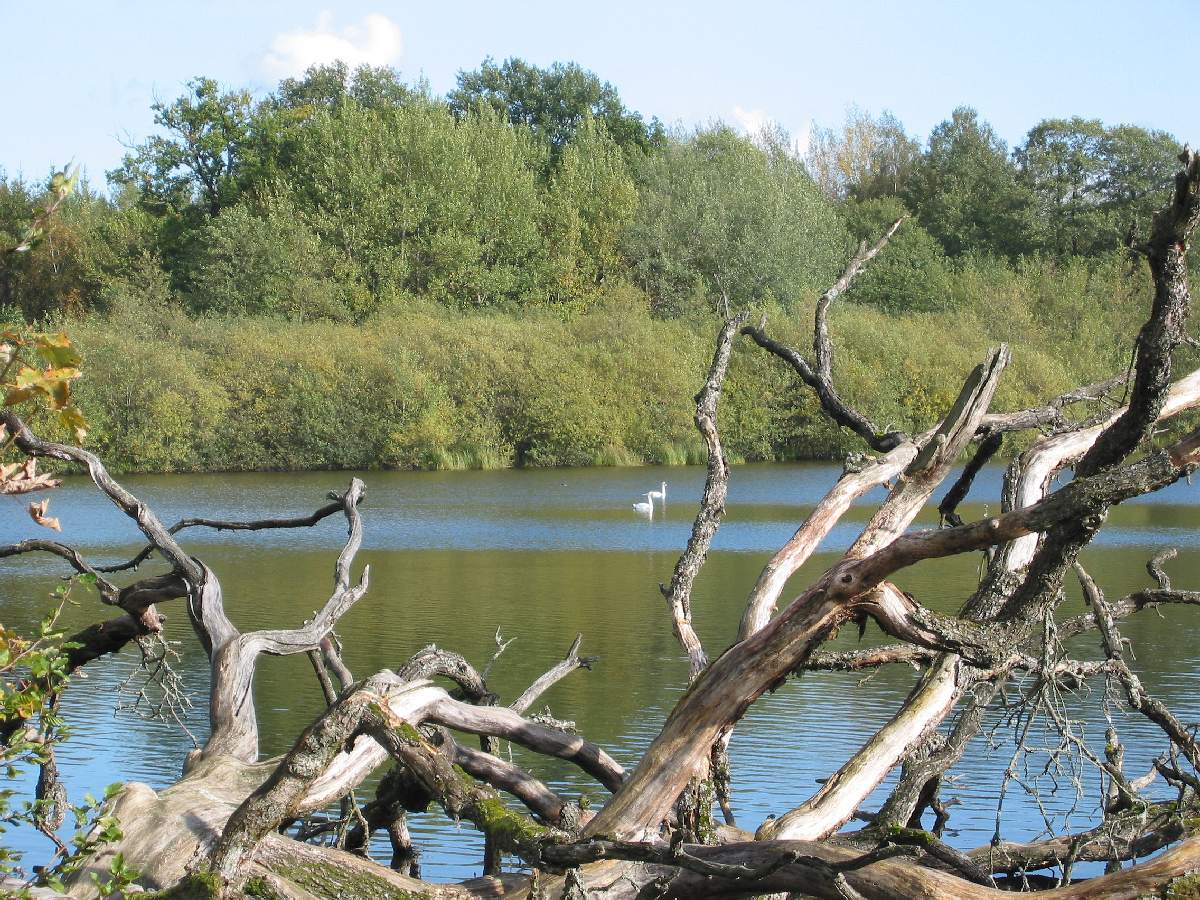
Nearby lies the Ober-Mooser Lake Nature Reserve, which features a birdwatching hide where visitors can observe rare bird species such as the red kite, black-necked grebe, black stork, great crested grebe, and little grebe.
In the village of Reichlos, visitors can explore the Reichlos Lake and the privately owned Barn and Kettle Hook Museum. The museum can only be visited by prior telephone appointment.
Both Ober-Mooser Lake and Reichlos Lake are protected nature reserves. To preserve their sensitive ecosystems, all water-based recreational activities are strictly prohibited.