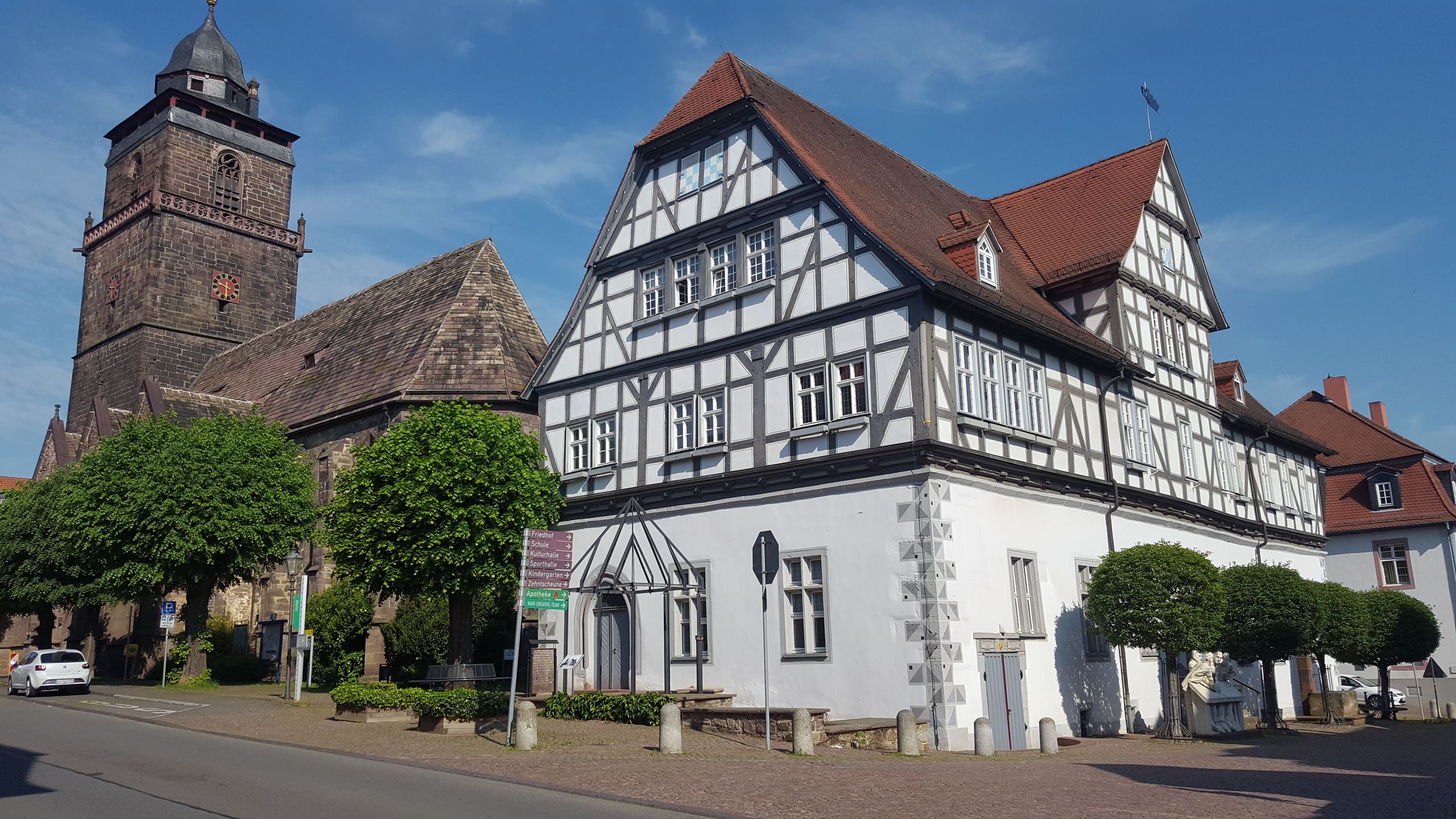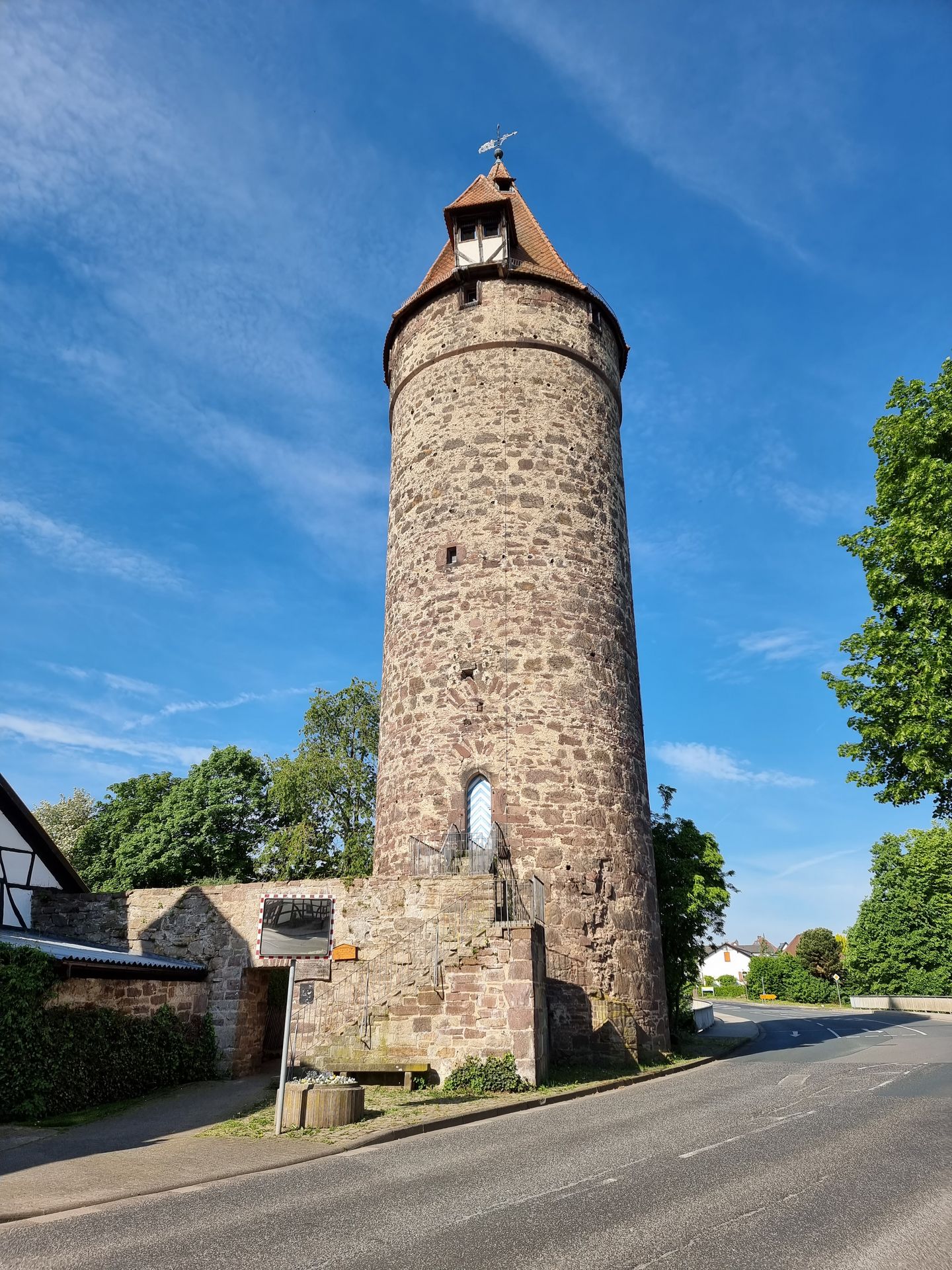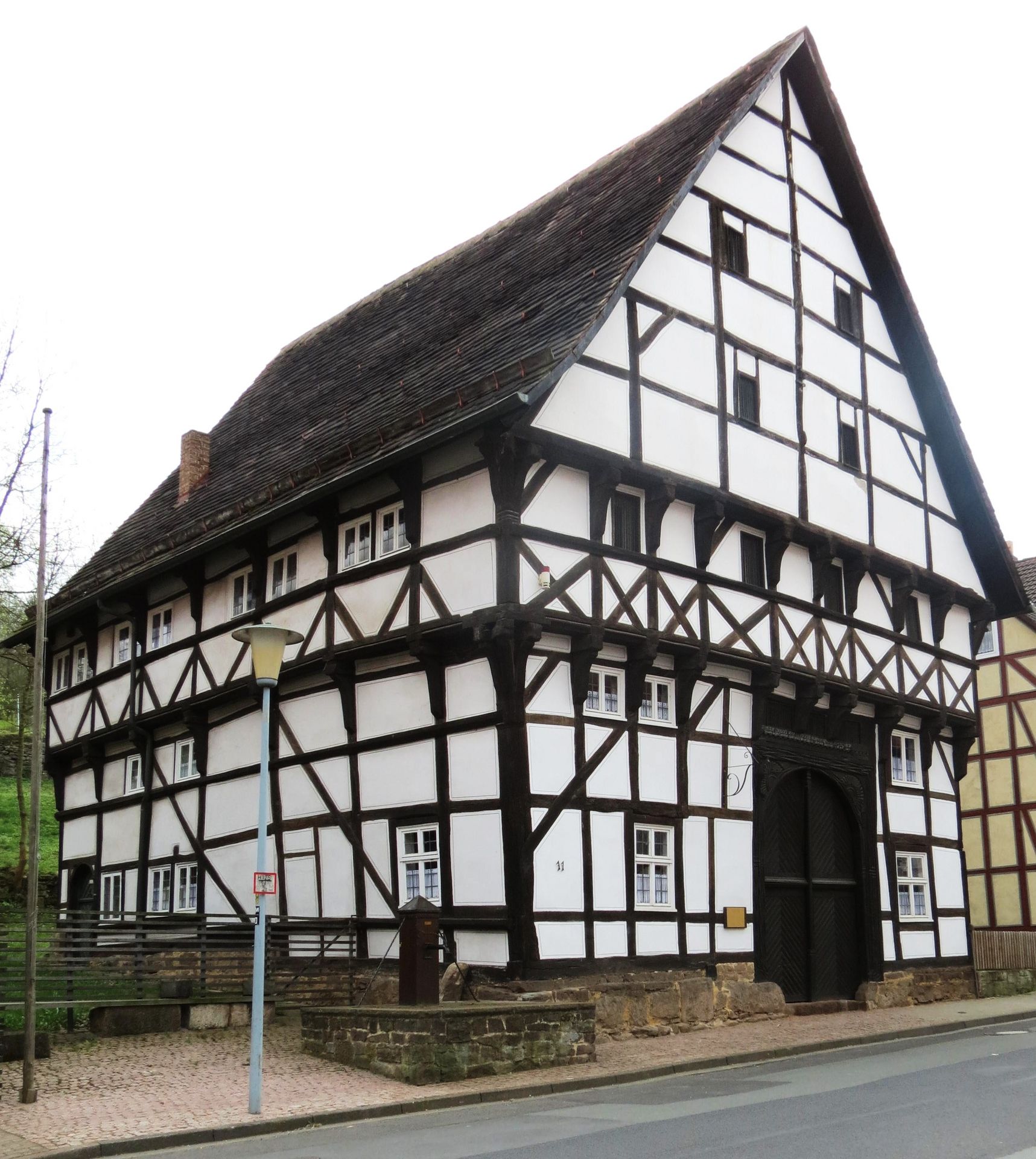
The town of Grebenstein comprises the charming districts of Grebenstein, Udenhausen, Burguffeln, Schachten, and Friedrichsthal (Rixen). It enchants visitors with its fairy-tale half-timbered buildings, picturesque towers, and the impressive ruins of its medieval castle.
Grebenstein is situated on a gently sloping plateau in the Esse Valley, where the River Esse flows between the old and new parts of the town. Two historic trade routes pass through the town and intersect at the market square: the old Bremen Road, running north to south, and the historic King's Road (Via Regia), stretching from west to east. As early as around the year 1000, a small market settlement is believed to have developed at this crossroads, attracting merchants and traders. Over the following two to three centuries, this settlement gradually evolved into a fortified medieval town.
Grebenstein for Fairy Tale Enthusiasts
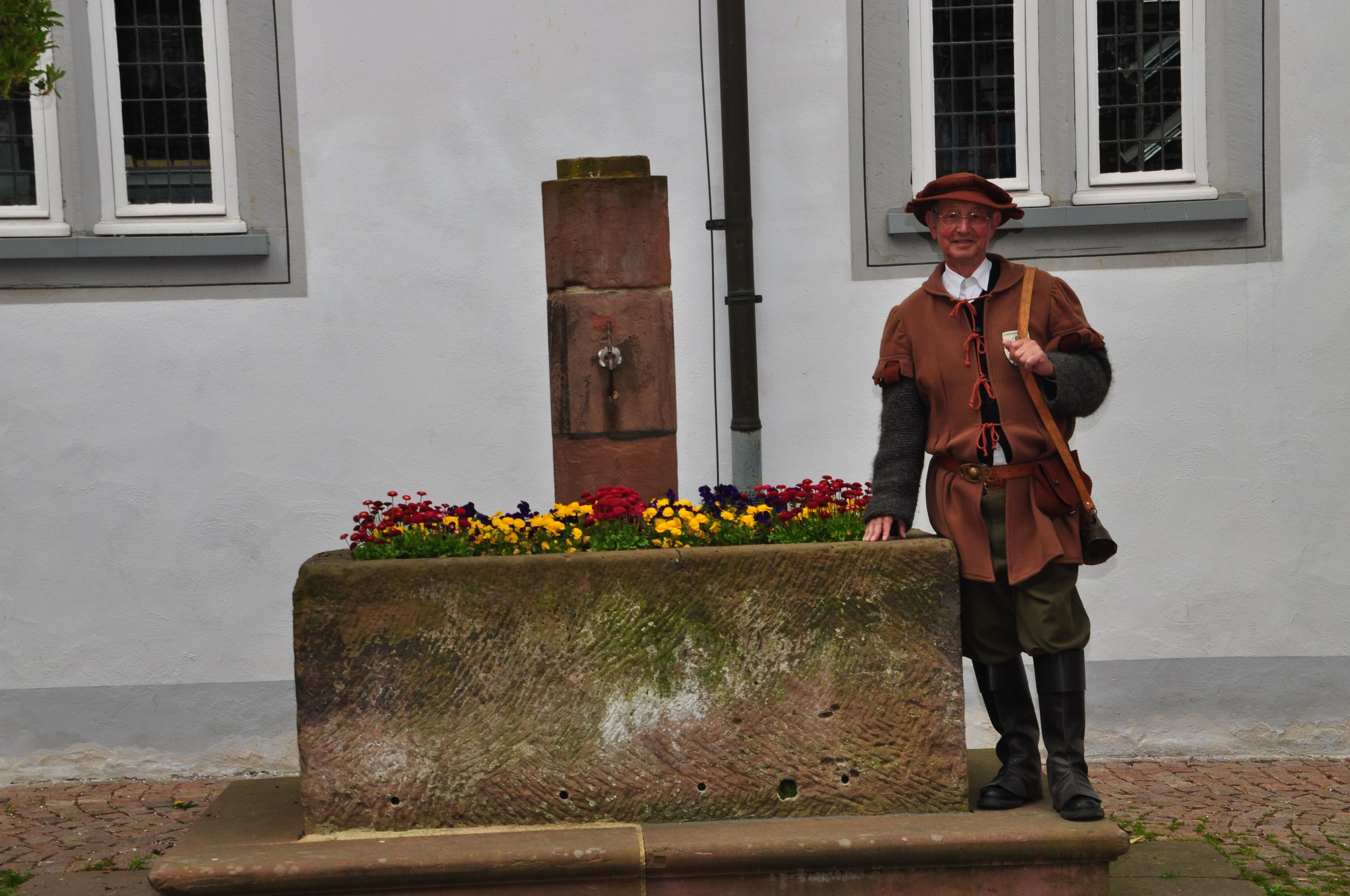
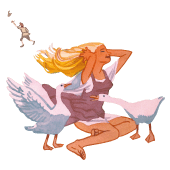
Follow in the footsteps of the Goose Girl and our Town Watchman as you explore Grebenstein's idyllic half-timbered streets and villages.
Visitors regularly gather in front of the Town Hall, where our Town Watchman, dressed in traditional historical uniform, leads guided tours through the enchanting fairy-tale town of Grebenstein, sharing fascinating stories about its history and legends.
Grebenstein for Holidaymakers and Day Visitors
Grebenstein offers a wide range of leisure activities. Attractions include the outdoor swimming pool, the Agricultural Citizens' Museum, scenic hiking trails, the castle ruins, the historic town wall, and the medieval town towers, making the town an ideal destination for both relaxing holidays and memorable day trips.